
Understanding Original Equipment (OE) Tyres in Australia
What Are OE Tyres?
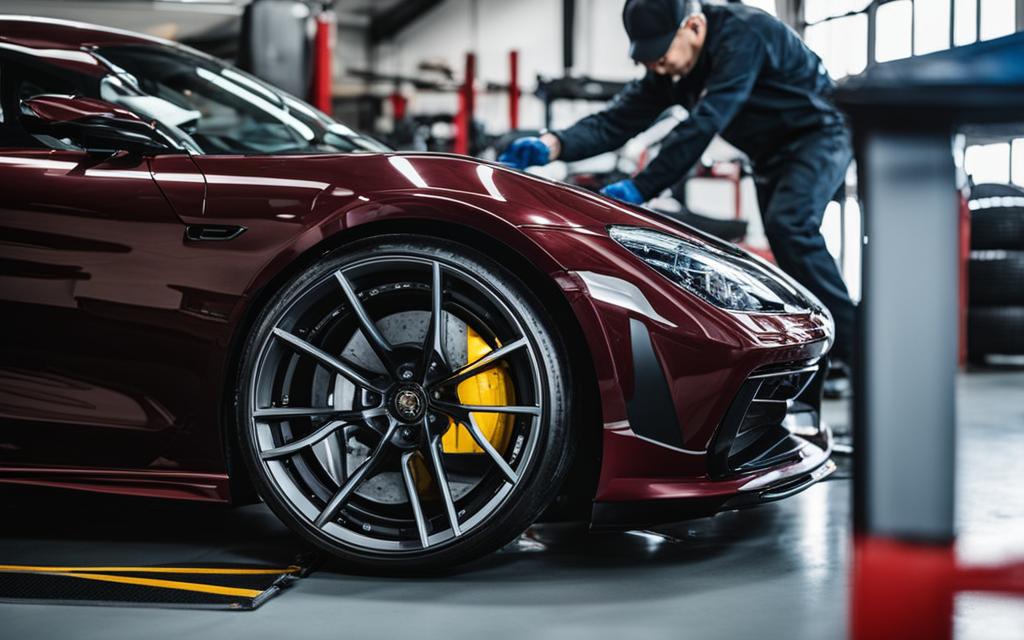
Original Equipment (OE) tyres are tyres specifically developed and approved by vehicle manufacturers to be fitted to their vehicles from the factory. These tyres are engineered to complement a vehicle’s specific characteristics, including weight distribution, suspension setup, performance capabilities, and intended use. In Australia, as in other markets, OE tyres play a crucial role in ensuring vehicles perform as designed while maintaining safety standards and warranty compliance.
How OE Tyre Systems Work
When a vehicle manufacturer develops a new model, they work closely with tyre manufacturers to create tyres that optimize the vehicle’s performance, handling, fuel efficiency, and comfort. This collaboration results in tyres that carry special markings or codes on their sidewalls, indicating they have been approved for specific vehicle models.
The Development Process
The OE tyre development process typically involves:
- Collaborative Design: Vehicle manufacturers share detailed specifications with tyre companies, including vehicle weight, power output, intended market, and performance targets.
- Rigorous Testing: Tyres undergo extensive testing at the vehicle manufacturer’s proving grounds, covering thousands of kilometers under various conditions to ensure they meet specific performance criteria.
- Fine-Tuning: Engineers adjust compound formulations, tread patterns, and construction to achieve the desired balance of grip, comfort, noise levels, and durability.
- Certification: Once approved, tyres receive manufacturer-specific codes that are molded into the sidewall during production.
Benefits of Using OE-Approved Tyres
Australian drivers who choose OE-approved tyres for their vehicles can expect several advantages:
- Optimal Performance: Tyres are matched to the vehicle’s characteristics, ensuring the handling and performance the manufacturer intended
- Warranty Compliance: Many vehicle warranties require OE-approved tyres, particularly for high-performance vehicles
- Safety Assurance: Extensive testing ensures the tyres meet strict safety standards for the specific vehicle
- Resale Value: Maintaining OE specifications can help preserve vehicle value
- Insurance Considerations: Some insurers may require OE-approved tyres for certain vehicles
Vehicles That Commonly Use OE-Specific Tyres
While all vehicles technically have OE tyres fitted at the factory, certain categories place greater emphasis on OE-specific markings:
Luxury Vehicles
Brands like Mercedes-Benz (MO codes), BMW (star marking), Audi (AO codes), and Porsche (N-spec codes) frequently require specific OE tyres. These manufacturers have particularly stringent requirements for tyre performance that align with their vehicles’ capabilities.
High-Performance Sports Cars
Ferrari, Lamborghini, McLaren, Aston Martin, and Porsche sports cars use specially developed tyres with unique codes. These tyres are engineered to handle extreme performance demands while maintaining safety margins.
Electric Vehicles
Manufacturers like Tesla (T0, T1, T2), Mercedes EQ (MO-P), and other electric vehicle producers require tyres designed to handle the instant torque delivery and additional weight of EVs. Special “EV” or “ELECT” markings indicate suitability for electric vehicles.
Premium SUVs and 4WDs
Vehicles like Land Rover (LR codes), Bentley (B codes), and high-end SUVs from Mercedes, BMW, and Audi often specify particular OE tyres to handle the unique demands of heavier vehicles with luxury comfort expectations.
Understanding OE Codes: Complete Reference Table
The following comprehensive table lists OE codes found on tyres sold in Australia, organized by manufacturer and type:
Manufacturer-Specific Codes
| Code | Vehicle Manufacturer | Notes |
|---|---|---|
| Aston Martin | ||
| A2A, A4A, A5A, A5B, A6A, A6B, A7A, A8A, A8B | Aston Martin | Various model approvals |
| AM2, AM4, AM6, AM8, AM9, AML, AMP, AMR, AMS, AMV, AMX | Aston Martin | Specific model applications |
| Audi | ||
| AO | Audi | Standard approval |
| AO1, AO2, AO3 | Audi | Generation-specific approvals |
| AOE, AOE1 | Audi Extended | Run-flat or extended mobility |
| AU, AU1, AU2 | Audi | Approved tyres |
| R01, R02 | Audi Quattro, RS4, RS6, R8 | Performance models |
| R1, RE0, RO1 | Audi | Various specifications |
| EZ | Audi / Mazda 6 | Dual approval |
| BMW / Mini | ||
| * | BMW / Mini | Star marking for approved tyres |
| QZ | Mini | Mini-approved tyres |
| RSC | BMW | Runflat System Component |
| Bentley | ||
| B, B1, BH, BL, BL1 | Bentley | Approved tyres |
| BLE, BLE1 | Bentley | Extended applications |
| Ferrari | ||
| F, F01, F02, F03, Ferrari | Ferrari | Approved tyres (can be fitted to other vehicles) |
| K1, K2, K3 | Ferrari | Approved tyres |
| Ford | ||
| FO, FO2 | Ford | Approved tyres |
| FP | Ford Performance | Performance applications |
| KA | Ford | Approved tyres |
| Jaguar / Land Rover | ||
| J, JLR, JRS | Jaguar | Approved tyres |
| LR, LR1, LR3, LRO | Land Rover | Approved tyres |
| Lamborghini | ||
| L, L1, LAM, Lamborghini | Lamborghini | Approved tyres |
| Maserati | ||
| Ferrari-Maserati | Ferrari/Maserati | Dual approval |
| MGT, MGT1, MGT2 | Maserati | Approved tyres |
| McLaren | ||
| MC, MC1, MC2 | McLaren | Approved tyres |
| Mercedes-Benz | ||
| MO | Mercedes | Standard approval |
| MO-P | Mercedes EQ | Electric vehicle approval |
| MO-S | Mercedes | Pirelli Noise Cancelling System |
| MO-VAN | Mercedes | Van & Transporter |
| MO1, MO1A, MO1E, MO2 | Mercedes | Model-specific (SL65 AMG and others) |
| MOE | Mercedes | Extended Life (Run-flat) |
| MOE-S | Mercedes | Extended (Run-flat) & Noise reduction |
| MOExtended | Mercedes | Run-flat technology |
| MOV | Mercedes | Van vehicle homologation |
| Porsche | ||
| N, N0, N1, N2, N3, N4, N5, N6 | Porsche | Numerical escalation reflects enhancements |
| NA0, NA1, NA2, NA3, NA4, NA5 | Porsche 911/992 | Current 911 generation |
| NB0, NB1, NB2 | Porsche Boxster/Cayman | Sports car models |
| NC0, NC1, NC2 | Porsche Cayenne | SUV models |
| ND0, ND1, ND2 | Porsche Panamera | Sedan models |
| NE0, NE1, NE2 | Porsche Macan | Compact SUV |
| NF0, NF1, NF2 | Porsche Taycan | Electric vehicle |
| Tesla | ||
| T0, T1, T2 | Tesla | Electric vehicle approvals |
| Volkswagen Group | ||
| VO, VW, VW1 | Volkswagen | Approved tyres |
| GTI | Volkswagen & Seat | Performance models |
| G | VW Golf | Recommended for Golf |
| PZ | VW (also Ford/Mazda/Mercedes) | Multi-brand approval |
| Other Manufacturers | ||
| Alfa Romeo, AR, ARR | Alfa Romeo | Approved tyres |
| AZ | Alfa Romeo / Fiat / Subaru / Toyota | Multi-brand approval |
| ALP | Alpina | Approved tyres |
| C1 | Chrysler Viper | Approved tyres |
| CZ, GZ, JZ | Subaru | Various approvals |
| DZ, MZ, KZ | Honda / Mazda / Toyota | Multi-brand approvals |
| FI, Fiat | Fiat | Approved tyres |
| FRV | Honda | Approved tyres |
| GOE | Genesis | Original Equipment |
| HN | Hyundai | Approved tyres |
| HO | Honda | Approved tyres |
| HP | Pagani | Approved tyres |
| I | Nio | Electric vehicle homologation |
| JP | Jeep | Approved tyres |
| Kia | Kia | Approved tyres |
| Lancia, LZ | Lancia | Approved tyres |
| LTS, LTS 2 | Lotus Elise | Sports car models |
| Mazda, SZ, TZ | Mazda | Various models (MPV, 6) |
| ME2 | Chevrolet Corvette | Sports car approval |
| Nissan, NR1 | Nissan | Including GT-R Nismo |
| Opel | Opel | Approved tyres |
| PE | Peugeot | Approved tyres |
| POL | Polestar | Electric/performance vehicles |
| R | Renault Zoe | Electric vehicle |
| Renault, A | Renault | Including Espace IV |
| RS | Renault Megan RS Trophy | Performance model |
| Seat | Seat | Approved tyres |
| Skoda, UZ | Skoda | Approved tyres |
| TO | Toyota | Approved tyres |
| TPC | General Motors | Corvette, Cadillac |
| VOL | Volvo | Approved tyres |
| ZK | Zeekr | Electric vehicle approval |
Technology and Feature Codes
| Code | Description | Category |
|---|---|---|
| Run-Flat Technology | ||
| DSST | Dunlop Self-Supporting Technology | Run-flat |
| EMT | Goodyear Extended Mobility Tyre | Run-flat |
| FEXM | Falken Extended Mobility Technology | Run-flat |
| HRS | Hankook Runflat System | Run-flat |
| RunFlat | Generic run-flat designation | Run-flat |
| SSR | Self Supporting Runflat (50 miles @ 50 mph) | Run-flat |
| ZP | Michelin ZP run-flat technology | Run-flat |
| Noise Reduction Technology | ||
| Acoustic | Significantly reduces interior noise | Noise reduction |
| B-Silent | Bridgestone noise reduction | Noise reduction |
| Conti-Silent | Continental noise reduction | Noise reduction |
| K-Silent | Kumho noise reduction | Noise reduction |
| NCS | Noise Control System | Noise reduction |
| NRT | Noise Reduction Tech | Noise reduction |
| NST | Noise Shield Technology | Noise reduction |
| PNCS | Pirelli Noise Cancelling System | Noise reduction |
| S1, S2, S3 | Progressive noise reduction levels | Noise reduction |
| SCT | SoundComfort Technology | Noise reduction |
| Silent Core | Falken polyurethane foam technology | Noise reduction |
| SilentDrive | Nokian sound reduction | Noise reduction |
| SILENTFOAM | Foam-based noise reduction | Noise reduction |
| SOUND ABSORBER | Generic noise reduction | Noise reduction |
| W-Silent | Winrun Silent Technology | Noise reduction |
| Self-Sealing Technology | ||
| B-Seal | Bridgestone self-sealing | Self-sealing |
| Conti-Seal | Continental self-sealing | Self-sealing |
| Power-Seal | Dunlop self-sealing | Self-sealing |
| Seal-Inside | Pirelli self-sealing | Self-sealing |
| Sealguard | Hankook self-sealing (up to 5mm holes) | Self-sealing |
| SealTech | Goodyear self-sealing | Self-sealing |
| Self Seal | Michelin self-sealing | Self-sealing |
| Electric Vehicle Specific | ||
| E+ | Yokohama EV-specific design | Electric vehicle |
| EDT | Goodyear Electric Drive Technology | Electric vehicle |
| ELECT | Generic EV designation | Electric vehicle |
| EV | Compatible with electric vehicles | Electric vehicle |
| Rim Protection | ||
| FP | Flange Protection for alloy rim | Rim protection |
| FR | Flange rim protection | Rim protection |
| FSL | Flange rim protection | Rim protection |
| MFS | Max Flange Shield (curb damage protection) | Rim protection |
| RG | Rim Guard with protection strip | Rim protection |
| RPB | Rim Protection Bar | Rim protection |
| Environmental/Efficiency | ||
| Enliten | Michelin lightweight technology | Efficiency |
| Green X | Michelin energy performance standard | Efficiency |
| LRR | Low rolling resistance | Efficiency |
| V1 | Enhanced performance and fuel economy | Efficiency |
| Construction Features | ||
| XL | Reinforced tyres with higher load index | Load capacity |
| HL | High Load | Load capacity |
| C | Light truck marking | Commercial |
| LT | Light Truck | Commercial |
| TT | Tubetype (requires inner tube) | Construction |
| Winter/Snow Features | ||
| M+S | Mud and Snow – efficient on muddy terrain | Winter |
| CRAMPONS | Maximum grip on snow/ice/frost | Winter |
| SPIKE | Winter tyre spikes for ice traction | Winter |
| STUDDABLE | Can accept studs for ice traction | Winter |
| Design Variations | ||
| DT | Different Tread Design (Michelin) | Design |
| DT1 | New pattern (Michelin) | Design |
| DT2 | New version (Michelin) | Design |
| DT3 | Designed Tuned | Design |
| G1 | Different outer diameter or tread width | Design |
| KS | New version (Pirelli) | Design |
| Compound Types | ||
| HARD | Hard compound tyres | Compound |
| MEDIUM, MEDIUM-HARD | Medium compound tyres | Compound |
| SOFT | Soft compound tyres | Compound |
| SUPER-SOFT | Super soft compound tyres | Compound |
| Sidewall Styling | ||
| BSW | Black Side Wall | Styling |
| BS | Black Stylized | Styling |
| OBL | Outlined Black Letters | Styling |
| OWL | Off White Letter | Styling |
| OWT | Outlined White Letters | Styling |
| RBL | Raised or Recessed Black Letters | Styling |
| RWL | Raised White Letter | Styling |
| WL | White letter | Styling |
| WSW | White Sidewall (entire white side) | Styling |
| WSW-N | White Sidewall Narrow | Styling |
| PTL | Premium Touch Logo (matte velvet finish) | Styling |
| Bridgestone Original Equipment | ||
| 1Z, 2Z, 3Z, BZ, FZ, HZ, NZ, OZ, RZ, VZ, WZ, XZ, YZ | Bridgestone OE designations | OE marking |
| Other Features | ||
| Connect | Michelin connected tyre | Technology |
| Limited Edition | Limited production run | Special |
| Pax | Integrated support ring for extended mobility | Safety |
| DA | Appearance defect (factory second) | Quality |
| DEMO | Mounted/demounted demonstration tyre | Quality |
| NHS | Not for Highway Service | Restriction |
| POR | Professional Off Road | Off-road |
| WET | Suitable for rainy/wet conditions | Performance |
| WTCC | World Touring Car Cup approved | Racing |
Ply Rating Reference
Ply Rating (PR) indicates the load capacity of the tyre and has no direct relationship to the actual number of plies:
- 4-PR: Light load capacity
- 6-PR: Standard light truck
- 8-PR: Medium load capacity
- 10-PR: Heavy load capacity
- 12-PR: Extra heavy load capacity
- 14-PR: Commercial heavy load
- 16-PR: Maximum commercial load
Choosing the Right OE Tyres in Australia
When replacing tyres on your vehicle in Australia, consider the following:
Check Your Vehicle’s Handbook
Your owner’s manual will specify which OE codes are approved for your vehicle. This is particularly important for high-performance and luxury vehicles.
Consult with Specialists
Reputable tyre dealers in Australia can access manufacturer databases to confirm which OE-coded tyres are suitable for your specific vehicle model and year.
Consider Your Driving Needs
While OE tyres are optimized for your vehicle, you might prioritize different characteristics (longer life, quieter ride, better wet grip) depending on your driving patterns and Australian conditions.
Climate Considerations
Australia’s diverse climate means drivers in northern Queensland face different conditions than those in Tasmania. Some OE tyres may be better suited to specific regional conditions.
Understand the Trade-offs
Non-OE tyres might offer advantages in certain areas (such as longer tread life or lower cost) but may not provide the exact handling characteristics the vehicle manufacturer intended.
Regulations and Standards in Australia
Australian tyre regulations are governed by the Australian Design Rules (ADRs), specifically ADR 23/01 for passenger cars and ADR 42/05 for light commercial vehicles. While these regulations don’t mandate OE-specific tyres for replacement purposes, they do require that replacement tyres meet certain minimum standards:
- Load capacity must equal or exceed the original specification
- Speed rating must equal or exceed the original specification (with some exceptions for winter tyres)
- Dimensions must be within acceptable tolerances
For certain high-performance vehicles, particularly those with speed capabilities exceeding 240 km/h, manufacturers may void warranties if non-OE approved tyres are fitted.
Conclusion
Understanding OE tyre codes helps Australian drivers make informed decisions when replacing tyres. While OE-approved tyres represent the manufacturer’s recommended choice, developed through extensive testing and engineering collaboration, drivers should weigh factors including cost, intended use, warranty considerations, and local driving conditions when making their selection. Consulting with qualified tyre professionals can help ensure you choose tyres that maintain your vehicle’s safety, performance, and compliance with Australian standards.
Whether you’re driving a performance sports car through the Adelaide Hills, a luxury SUV in Sydney traffic, or a family vehicle on Queensland’s highways, understanding OE tyre specifications ensures you can make choices that align with both your vehicle’s capabilities and your driving needs.
Cheers,
Brett


