staff-page-2

Puncture-Proofing Commercial Tyres: A Comprehensive Guide

‍Punctures in commercial tyres can be a costly affair, both in terms of time and money. Normal non-puncture proofed tyres not only require costly repairs and replacements, but they can also cause costly delays as well which can cost more than the tyres involved. There is, however, a solution to this problem - puncture proofing.

Puncture proofing is a process in which a special material is inserted into the tyre, making it much more resistant to punctures. In this article, we'll be exploring the various aspects of puncture proofing commercial tyres in Australia and why the team at Darra Tyres is the best for the job.

Project Management: Minimise Downtime
Before we start Puncture proofing is unlike buying a standard tyre, at Darra Tyres we treat each job like a project that is managed from start to finish. Most of the equipment that these tyres go on cannot afford long downtime and so we manage this to minimise the potential downtime saving you money.

Why Consider Puncture Proofing Commercial Tyres
Puncture proofing commercial tyres can have a number of benefits. Firstly, it can help to reduce the risk of punctures and the resulting time and money costs associated with them. Additionally, puncture proofing can help to improve the overall lifespan of the tyres, as the special material helps to protect the inner tyre from wear and tear.

Finally, puncture proofing can also help to improve the overall performance of the tyres, as the special material helps to reduce the rolling resistance of the tyres and improve their grip on the road.

In terms of cost-benefit analysis, puncture proofing can be seen as a worthwhile investment. Not only does it help to reduce the risk of costly punctures, but it also helps to improve the performance and lifespan of the tyres. Furthermore, the cost of puncture proofing is relatively low compared to the cost of repairing or replacing punctured tyres, making it a cost-effective solution.

Which Vehicles Does Puncture Proofing Work Best On
Puncture proofing is most effective on vehicles with large tyre sizes, such as earthmoving equipment. This is because such vehicles typically have a higher risk of punctures due to the greater surface area of the tyres and the at-risk operating environments. Furthermore, the larger tyres also have a greater capacity for puncture proofing material, which helps to increase the effectiveness of the puncture proofing.

Whilst puncture proofing is not limited to these types of vehicles. It can also be effective on smaller vehicles, such as cars and vans. In these cases, the puncture proofing material may not be as effective, but it can still help to reduce the risk of punctures. However other issues such a tyre temperature come into play and they also my not pass the cost benefit analysis.

What Is The Process Of Puncture Proofing Tyres
The process of puncture-proofing tyres is relatively simple. Firstly, the old tyre is removed from the vehicle and a new one placed on it. It is possible to do for old tyres but this my not prove cost-effective depending on the age and wear on the tyre. The puncture-proofing material is then inserted into the tyre. The material is then spread evenly across the surface of the tyre, ensuring that the puncture-proofing material is completely even.

The puncture-proofing material itself is a special type of rubber compound, designed to be highly resistant to punctures. It is also designed to be flexible enough to move with the tyre as it is driven, ensuring that it doesn't cause any discomfort to the driver. Unfortunately, not all materials are created equal and that's why we only use proven tyres of puncture proofing which we have show work over the past 20 + years.

Are There Any Drawbacks On Puncture Proofing Tyres
Although puncture-proofing tyres can have several benefits, there are a few potential drawbacks to consider. Firstly, puncture proofing can increase the cost of the tyres, as the material is relatively expensive. Additionally, puncture-proofing can reduce the grip of the tyres, as the material is slightly less grippy than regular rubber. However, this won't normally affect as most commercial applications are not high speed and the need for grip is reduced.

Finally, puncture proofing can also reduce the comfort of the ride, as the material can be slightly less comfortable than regular rubber.

However, these drawbacks can be offset by the numerous benefits of puncture-proofing. The increased cost of the tyres is relatively small compared to the cost of repairing or replacing punctured tyres, making it a cost-effective solution. Furthermore, the reduction in grip and comfort can be minimised by using the highest quality puncture-proofing materials available.

Is The Investment Worth The Return For Puncture Proofing Tyres
The investment in puncture-proofing tyres can be seen as a worthwhile one. Not only does it help to reduce the risk of costly punctures, but it also helps to improve the performance and lifespan of the tyres. Furthermore, the cost of puncture proofing is relatively low compared to the cost of repairing or replacing punctured tyres, making it a cost-effective solution.

In terms of cost-benefit analysis, puncture proofing can be seen as a worthwhile investment. The cost of puncture proofing is relatively low compared to the cost of repairing or replacing punctured tyres, making it a cost-effective solution.

Additionally, puncture proofing can help to reduce the risk of punctures and the resulting time and money costs associated with them. Finally, puncture proofing can also help to improve the overall performance and lifespan of the tyres, making it a great investment for commercial vehicles.

Why Should You Use Darra Tyres And What Experience Does Darra Tyres Have In Puncture Proofing Tyres
When it comes to puncture-proofing tyres, there is no better team than the team at Darra Tyres. With over 35+ years of experience in the tyre industry, the team at Darra Tyres is well-equipped to handle all your puncture-proofing needs.

Furthermore, their team of experts are highly trained and experienced in the latest puncture-proofing technology, ensuring that your tyres are fitted with the best possible protection.

Furthermore, Darra Tyres also offers a wide range of puncture-proofing materials, allowing you to choose the one best suited to your needs. Their range includes everything from the most basic puncture-proofing materials to the most advanced, allowing you to choose the one that best suits your needs.

Finally, Darra Tyres also offers competitive prices on their puncture-proofing materials, allowing you to get the best protection for the best price. So, if you're looking for the best puncture-proofing solutions for your commercial tyres, the team at Darra Tyres is the best choice.

Give the team at Darra Tyres a call on 0733753366 about the best options for Puncture Proofing your commercial tyres.

Commercial Vehicle Tyre Brands With Puncture Proofing Built In Australia

Commercial Tyre Brands With Puncture Proofing For Professional and Commercial Fleet Drivers

For professional drivers, having a tyre that can withstand the rigours of the open road is a must. So it's great to know that there are commercial tyre brands that are available with puncture proofing already built in. 

One brand that is well-known for its puncture proofed commercial tyres is Continental.

Providing A Simple Solution To A Small Problem With Huge Consequences

While there are many brands that come with different technologies and materials that help prevent air pressure loss to the point when the tyre is flat, one of the top brands that does this well is Continental. 

The brand has come out with its ContiSeal™ tyres, a tyre that comes with puncture proofing built in that is 80% effective in sealing tyre punctures immediately. 

On the open road, something as tiny as a nail, a piece of glass or a sharp stone can cause damage to your tire tread in an instant. And Continental's ContiSeal™ tyres will provide drivers that relief and peace of mind knowing that they're safer, and that they don't have to worry changing a flat tyre or being stranded on the side of the road. 

Continental's ContiSeal™ a self-sealing technology that instantly and permanently seals most punctures as they happen. Its optimised polymer compound instantly bonds and seals the puncture instantly, creating an airtight seal that keeps the compressed air in. 

When you get punctured tyre, you'll find that you are safe enough to bring your vehicle into the nearest tyre shop for service. How does it work? Watch this short video below. 

[Video Link: https://youtu.be/n6FxJxdMCk0]

The ContiSeal™ tyre has a viscous adhesive sealant layer on the inner wall which will protect against punctures up to 5 mm in diameter. It works instantly and even if the object that caused the puncture becomes dislodged, this sealant layer will keep your tyre's compressed air in, ensuring little loss in air pressure. 

Keeping You Safe Until You Can Visit A Professional Tyre Shop

However, just like all sealant technologies the ContiSeal™ tyre is not puncture resistant (a whole other type of tyre tech—like Michelin's Uptis tyres). 

You'll need to visit a professional tyre store and have your tires checked immediately to have it repaired or replaced immediately. If you're anywhere across Australia, chat with the team at Darra Tyres so our tyre technician can check the condition of your tyres and make the necessary repairs or replacement before you set out again. 

Rubbers That Will Keep You Safe And Going 

Commercial tyres with puncture proofing already built in are essential for commercial fleets. They need rubbers that won't go flat, and endanger their drivers and their passengers or loads. 

Brands like Continental Tyres are paving the way to make sure that not only are you safe on the road, but that you won't have to worry about changing your tyres immediately or waiting for roadside assistance. You'll have the time and opportunity to keep going and get to your tyre shop safely.  

If you're anywhere across Australia and are interested to learn more about tyres that have puncture proofing, visit Darra Tyres. If you have any tyre questions, contact Darra Tyres today. 

Keeping your family and fleet safe on the road,

Advantages and Disadvantages of Puncture Proofing Commercial Tyres

When it comes to puncture proofing your commercial tyres, there are a few things you need to take into account. You have many factors to consider when making an informed decision to purchase puncture proof commercial tyres for your fleet. Or, to get aftermarket puncture proofing for your commercial tyres. 

The Advantages Of Puncture Proofing Commercial Tyres

There are a many very good benefits to puncture proofing your commercial tyres, like:

  1. Reduced Downtime - one of the biggest advantages of puncture proofing your tyres is that it reduces downtime. This is because when you have a puncture, you don't have to waste time changing the tyre, you can simply continue on your journey. This can be a huge advantage for businesses that rely on their vehicles to get from A to B.
  1. Extends The Life Of Your Tyres - Punctures are one of the leading causes of tyre damage and premature wear. By preventing punctures or ensuring that any punctures are sealed off until professional tyre assistance is available, you can get more mileage out of your tyres before they need to be replaced.

Additionally, properly inflated tyres tend to last longer than those that are constantly under- or over-inflated.

  1. Improved Fuel Efficiency - another advantage of puncture proofing your commercial tyres is that it can improve fuel efficiency. This is because when a tyre is correctly inflated, it has less rolling resistance, which means it takes less energy (and fuel) to move your commercial vehicle forwards. Which means your engine doesn’t have to work as hard. This leads to fuel saving which in turn results in significant savings over time, particularly for businesses that cover large distances.
  1. Enhanced Safety - another benefit of puncture proofing your tyres is enhanced safety. This is because when a tyre is correctly inflated, it has better grip on the road. A better tyre grip helps prevent accidents on the road. 

When a tyre is punctured, it can lose air quickly. And if you are driving on an under-inflated or flat tyre, you are in danger of losing control over your commercial vehicle and getting into a serious accident., Puncture proofing helps to prevent flats from happening and you can help keep yourself and others safe on the road.

The Disadvantages Of Puncture Proofing Commercial Tyres

Unfortunately, getting puncture proofing or purchasing new tyres (with puncture proofing already built in) does have a few advantages, like: 

  1. Initial Cost - one of the main drawbacks of puncture proofing your tyres is the initial cost. If you have a large fleet of vehicles, this can add up quickly. And it can be quite expensive to purchase new tyres with puncture proofing for the whole fleet. 

If you take the other route and have all of your tyres puncture proofed by tyre specialists, it can be costly as well. Depending on the size and type of commercial tyres you need, puncture proofing can add a hefty amount on top of that. 

However, this cost should be considered as an investment, as it will save you money in the long run by reducing downtime and improving fuel efficiency. Factor in the cost of replacing tyres prematurely or getting into an accident, and puncture proofing may actually save you money. 

  1. Limited Choice Of Products - another disadvantage of puncture proofing your tyres is that there are limited products on the market at the present. This means that you may need to research and check for suppliers and professionals to help you find tyres that suit your specific needs and requirements. 

However, this is likely to change in the future as more companies enter the market and offer more puncture proofing products. That’s why it’s good to know that you can go to independent specialists like Darra Tyres. 

Independent tyre shops like Darra Tyres are not exclusively affiliated with any one brand and that means they can choose the best tyre brand and puncture proofing system for your commercial vehicles and needs. They won’t favour one brand over the other. They will favour what’s best for your commercial vehicle, and your budget and your safety.

  1. Aftermarket Puncture Proofing May Void Your Tyre Warranty - If your commercial tyres come with puncture proofing built into them, no worries. But do note that many tyre manufacturers void the warranties of tyres that have been puncture proofed. They consider puncture proofing to be an aftermarket modification. So, be sure to ask your tyre store about the brand of commercial tyres you want and check its coverage before having any aftermarket puncture proofing work done. That way, you won’t inadvertently void your warranty.
  1. Puncture proofing effectiveness may vary - The effectiveness of puncture proofing products you use will vary from one product to another. This means that you'll need to do additional research in order to find a product that's right for you and your business needs. 

Here’s where partnering with an independent tyre store will be to your advantage. Because they already know the different products and brands, they’ll have the experience and expertise to take care of your needs and requirements—easy. 

There are many factors to consider when deciding whether or not to puncture proof your commercial tyres. If you're located anywhere across Australia and would like to talk to the team, visit Darra Tyres. If you have any tyre questions now, contact Darra Tyres today. 

Keeping your family and fleet safe on the road,

Innovations for puncture proof commercial tyres

Future Innovations For Puncture Proof Commercial Tyres

As a commercial fleet owner, you're always looking for ways to save money and increase efficiency. One way to do this is to invest in puncture-proof tyres for your vehicles. 

While the initial investment may be higher than for traditional tyres, puncture-proof tyres can save you money in the long run by eliminating flat tyres and the associated downtime and maintenance costs. 

Future-Proof Your Commercial Fleet With Puncture Proof Tyres

There have been many innovations in tyres in recent years, but one of the most promising is puncture proofing. 

Puncture proof tyres are a godsend for commercial fleets, as they lessen the chances for your tyre to go flat. This reduces the risks of road accidents and the time-consuming need to make roadside tyre changes. 

The Latest Innovations In Puncture Proofing Commercial Tyres

There are several manufacturers who offer puncture proofing for commercial tyres, including Michelin, Continental and Goodyear. 

The latest innovation in puncture proofing is the use of Kevlar belts in the tyre construction. Kevlar is a high-strength synthetic fibre that is used in bulletproof vests and other ballistic applications. 

Kevlar is incredibly strong and resistant to abrasion, making it an ideal material for use in tyres. The Kevlar belt reinforces the sidewall of the tyre, making it much less likely to be punctured by sharp objects on the road. This greatly reduces the risk of flats and blowouts, which can be extremely dangerous for fleet vehicles. 

In addition to the Kevlar belt, Michelin's new tyre also features an advanced tread compound that is designed to resist cuts and abrasions. This further enhances the tyre's puncture resistance and makes it one of the most innovative tyres on the market today.

What Does The Future Hold For Puncture Proofing?

As tyre technology continues to evolve, we can expect to see even more advancements in puncture proofing. This is an area where Michelin is particularly invested, as they have already announced plans to introduce even more puncture resistant tyres. 

And Michelin’s partnership with General Motors is bearing fruit. The tyre giant is set to release commercially available puncture resistant tires in 2024. Called The MICHELIN® Uptis, or Michelin Unique Puncture-Proof Tire System, this puncture resistant and airless tyre is expected to reduce the risk of flat tyres on the road (and the danger of road accidents and deaths). 

The prototype tyre was introduced and road-tested last year, at the 2021 Munich Motor Show. Reports state that the Michelin Uptis tyre will be ready for roll-out for passenger cars, for now. There is great interest in the fleet industry over its availability and long-term viability in this sector. 

With continued research and development, it is likely that we will see even more breakthroughs in tyre technology that will make driving safer and more reliable than ever before.

Future-Proof Your Commercial Fleet With Puncture Proof Tyres

Puncture-proof tyres are an investment that can pay off in the long run by eliminating flats and the associated downtime and maintenance costs. 

In addition, puncture-proof tyres can help increase fuel efficiency and reduce emissions. If you're looking for a way to future-proof your commercial fleet, consider investing in puncture-proof tyres. 

If you're located anywhere across Australia and need puncture proofing for your commercial tyres, visit Darra Tyres. If you have any tyre questions, contact Darra Tyres today. 

Keeping your family and fleet safe on the road,

Sealants used in puncture proofing on commercial tyres

What Type of Sealant is Used to Puncture Proof Commercial Tyres?

In Queensland and northern New South Wales, many of our customers prefer using aftermarket sealants to puncture proof commercial tyres for their commercial fleet vehicles. 

Across Australia, commercial fleet vehicles travel over a variety of terrain types, from city streets to rural highways. This can put a lot of wear and tear on their tyres, and punctures are a common occurrence. To prevent costly downtime, many commercial fleets rely on puncture proofing sealants. 

But what are these sealants and how do they work? 

Types of Sealants For Puncture Proofing Commercial Tyres In Queensland And Northern South Wales Australia

There are two main types of puncture proofing sealants used in commercial tyres: latex-based sealants and polymer-based sealants. 

Latex-based sealants are the most common type; they are cheap and easy to apply. The are synthesised to fill small holes and cracks in the tyre, and provide an effective barrier against punctures. they are also very effective in preventing air from escaping through and making the tyre go flat. 

Polymer-based sealants are less common because they are more expensive. But polymer-based sealants are more durable and longer-lasting that latex-based sealants. Additionally, they offer better protection against punctures and are more resistant to extreme temperatures.

Benefits of Using Sealants

Sealants have many benefits for commercial fleet vehicles, including reducing the risk of flats, extending the life of tyres, and improving fuel economy. 

They can also help keep tyres inflated during extreme temperatures. In addition, using sealants can help avoid costly repairs and downtime for vehicles. 

Applying Puncture Proofing Sealants To Your Commercial Tyres

Puncture proofing sealants are applied to the inside of the tyre, where they form a barrier against foreign objects such as nails, glass, or metal shards. 

When a sharp object penetrates the tyre, the sealant is forced into the hole by the pressure of the air inside the tyre. This quickly forms a plug that seals the hole and prevents air from escaping.

Puncture proofing sealants can be reapplied as needed; however, they will eventually need to be replaced. This is because they will slowly degrade over time, especially if exposed to extreme temperatures. 

For this reason, it's important to have the condition of your tyres checked regularly by professionals like Darra Tyres and top up the sealant as necessary.

Keeping Your Fleet Safe And Your Tyres In Top Shape

Puncture proofing sealants are an essential part of keeping commercial fleet vehicles on the road in Australia. If you are responsible for maintaining a fleet of commercial vehicles in Queensland or northern New South Wales, make sure to puncture proof your tyres. It will help keep your tyres in top condition, reduce the risk of flats, extend the life of tyres, and improve fuel economy. 

If you're located in anywhere across Australia and need puncture proofing for your commercial tyres, visit Darra Tyres. If you have any tyre questions, contact Darra Tyres today. 

Keeping your family and fleet safe on the road,

What is puncture proofing and how does it work for commercial tyres?

All You Need To Know About Puncture Proofing For Commercial Tyres

If you own or operate a commercial fleet in Queensland or in Norther New South Wales, Australia, then you know how important it is to keep your vehicles on the road. 

Downtime means lost productivity and profits, so you need to do everything you can to avoid unplanned stops. 

When it comes to commercial tyres, one of the most important things to consider is puncture proofing. After all, even the smallest puncture can cause a major problem—not to mention a hefty repair bill. So, what exactly is puncture proofing and how does it work? 

Reduce Tyre Damage, Prolong Life Of Your Tyres With Puncture Proofing 

Puncture proofing is a preventative measure that helps reduce the risk of punctures occurring in the first place. It works by filling small holes or cracks in the tyre with a sealant that hardens when it comes into contact with air. 

This sealant forms a barrier between the tyre and the object, preventing it from puncturing the tyre. It is installed by lining or filling the inner wall of the tyre with a specialised gel or foam. This sealant material helps to support the tyre walls, absorbing impact and spreading weight evenly so that there is less chance of a puncture occurring.

Some commercial tyres come with puncture proofing already built in, but others will need to have it added as an aftermarket service. If you’re looking for puncture proofing as an an aftermarket service, you can ask Darra Tyres and their team can help you get it done correctly.  

It’s important to make sure that your tyres are properly protected against punctures before hitting the road. The last thing you want is to be stranded on the side of the highway with a flat tyre!

Puncture Proofing Your Tyres To Improve Safety, Handling And Reliability

Puncture proofing your commercial tyres is a simple and effective way to improve safety, reliability and vehicle control while also reducing the costs associated with tyre failure. 

Puncture proofing is an effective way to reduce tyre damage and extend the life of your tyres. It can save you money by reducing the need for frequent repairs or replacements. And it can help keep your vehicles on the road, reducing downtime and increasing productivity.

Plus, adding puncture proofing to your tyres can help extend their lifespan too. So, if you're looking for an easy way to protect your investment, be sure to get your tyres puncture proofed today. 

If you're located across Australia and need new tyres with puncture proofing, or aftermarket puncture proofing we can arrange. If you have any tyre questions, or about how we can help keep your tyres in good condition, contact Darra Tyres today. 

Keeping your family and fleet safe on the road

Self-Repairing Tyres: Will It Be The Future?

Self-Repairing Tyres: Will It Be The Future? | Isn’t it frustrating to pull off a highway just to fix a flat tyre? Thanks to a major breakthrough in science and technology, we have developed a material that makes it possible for tyres to heal and repair on their own quickly. 

This idea of creating self-healing tyre materials is not new though. Back in 2013, Spanish scientists discovered a material that gained  97% of the original tyre stability back within two hours by just letting it rest after cutting it with a sharp blade. 

But what really is it that makes self-repairing tyres the tyres of the future? Well, we have listed some reasons below for you. 

You don’t need vulcanisation for self-repairing tyres.

An important step in the process of manufacturing this tyre of the future is to make sure that it does not need vulcanisation. In 1839, Charles Goodyear added sulfur to the rubber during vulcanisation. That is when the tyre rubber became more durable and turned into the plastic to elastic state but these links can’t be restored when they break so in no way can these tyres be used for the long run. 

To avoid that, scientists have chemically modified rubber to have the same level of elasticity and durability similar to what can be accomplished by vulcanisation. Within a week, a damaged tyre that is made out of this compound can be used again. The healing period is faster when the heat is added to it as it accelerates the healing process. These self-repairing tyres are able to withstand a stress of 754 pounds per square inch. 

There are standards for self-repairing tyres.

In the past, tyre manufacturers did models of tyres that repair themselves when they’re damaged. Supposedly, these models improve road safety as a punctured tyre can lead to a blowout which decreases car handling dramatically, especially during high-speed rides. However, new discoveries have a different approach to self-repairing tyres. Manufacturers of this type of tyre now use a vicious coat under the tread so when the outer layer gets broken, the mass within it can fill in the holes completely. This may already become a permanent solution for car owners so they won’t have to change their tyres even when they are damaged.

What does the future of self-repairing tyres look like? 

Customers can get self-repairing tyres in the near future. While it’s hard to predict which method and technology can be the most reliable, these innovation secures a slot in the future. Self-repairing tyres will allow riders to drive safer and can prevent a lot of road accidents. From now, it’ll only be a matter of time until this technological advancement becomes a standard in all parts of the world. 

If you need new tyres in Brisbane, visit Darra Tyres. If you have any tyre questions, contact Darra Tyres today.

Keeping your family and fleet safe on the road,

Kevin Wood

Top 5 Tips To Keeping Your Tyres In Shape For Your Safety

All car owners should always put routine car maintenance as a priority. Even if most parts of a vehicle is important for it to fully function, one of these parts is vital in terms of safety and functionality: the tyres. Keeping your tyres in shape is critical to the handling, safety and overall quality of your driving. This is why tyres are significant investments and should not be taken for granted. 

You see, driving is one of the most dangerous things we do in our lives and we don’t even realize that. We rely on the four tyres on our vehicles to keep us travelling through our route with safety. And this is exactly why it is extremely essential to keep our tyres well-maintained. 

So how do we do that? Below are the top 5 tips for keeping your tyres in shape for your safety: 

Check Proper Air Pressure.

It is important to keep your tyres aired up to the proper pounds per square inch (PSI). Your tyres are created to work best at a specific PSI. Overinflating them can lead to premature wear and may cause a tyre blowout. Underinflation on the other hand may allow your tyres to come unseated from the wheels during manoeuvres and possibly wears out quicker giving your decreased control over your driving. It is essential for you to keep a tire gauge in your vehicle at all times to help you check the air pressure in your tyres on a regular basis and adjust the air as needed.

Rotate Your Tyres.

The world-famous tyre manufacturer says that rotating your car tyres must be done every 6,000 to 8,000 miles because each tyre wear differently. For front-wheel-drive cars, the front tyres wear twice the rate of the rear tyres. Some tyre experts say that in left-hand-drive areas, the left tyre wears faster than the right tyre so you must keep an eye on that. Having your cars rotated on a regular basis helps in achieving more uniform wear, giving you more consistent performance and a longer tyre service life.

Confirm Your Treads.

For ages now, it is known that tyres should have at least 2/32 inch of tread depth for it to function best and laws agree on this. However, there are new studies which suggest that greater tread depth is a better option for drivers.

Balance Your Tyres.

Getting your tyres balanced from time to time is also very important in maintaining your vehicle. A tyre technician will do this for you using a machine that checks the weight distribution of your ride all allows the placement of lead weights on the tyre rim to achieve a balanced dispersal. Balancing your tyres reduces vibration and gives you a better ride quality.

Align Your Tyres. 

Apart from your air pressure, tread depth and tyre balance – it is also very important to keep your tyres aligned. The front tyres require regular alignment to ensure that there is not too much difference in the way these tyres are pointing. Not having your tyres aligned will cause excessive premature wear. 

Keeping your tyres in shape for your safety is basic but vital. Engaging in a regular tyre inspection and maintenance, plus moderating how you drive can keep you safe on the road and add to the lifespan of your tyres.

If you need new tyres in Brisbane, visit Darra Tyres. If you have any tyre questions, contact Darra Tyres today.

Keeping your family and fleet safe on the road,

Kevin Wood

Buying tyres

Tyre Buying Tips

Get the Best Tyre within Your Budget

So, you need new tyres. The choice is huge and confusing. These tyre buying tips should help you choose the best tyres for your vehicle, driving style and budget.

Match Your New Tyres to Your Car

Tyre manufacturers invest big money into developing new tyres and ensuring tyres are made to keep you safe.

The car manufacturer will have tested many types of tyres on the vehicle. They will have tested for handling, braking, how fast the tyre tread wears, road noise and ride comfort. In your car owner’s manual, it is likely that you’ll find recommendations for your tyres, including size, speed rating and load rating. You should always buy the type of tyre recommended by your car’s manufacturer.

How Do You Know That You Are Buying Tyres to Match Your Car?

When buying new tyres, the markings on the tyre’s sidewall tell you all you need to know. It may look like you need an Enigma machine to decipher the confusing code, but this guide tells you all you need to know:

Vehicle – Tyres are developed for different vehicle types. This is indicated by the following letters:

  • P: passenger car and most 4WD
  • LT: light trucks
  • M: motorcycle
  • T: temporary

Tyre width – The first numbers show the tyre width in millimetres.

Profile – The second number indicates the profile (tyre width to tyre height), usually as a percentage. High-performance tyres are indicated by a low percentage.

Construction – For example, ‘R’ for radial.

Diameter – Indicating which rim size the tyre is designed for, and expressed in inches.

Load Rating – Either expressed as a weight or as an index number.

Speed Rating – The final letter in the code indicates the speed rating. This is the maximum speed the tyre can travel at for 10 minutes without risk of a tyre blowout.

What Tyre Brand Is best?

You will also find the tyre brand and model embossed on the tyre’s sidewall. Premium brand tyres are likely to be more expensive, but savvy drivers buy premium tyres in Brisbane. You find that premium brand tyres could:

  • Save on fuel
  • Give shorter braking distances
  • Offer a more comfortable driving experience
  • Last longer

Whichever brand you choose, we recommend that you fit the same brand on all your tyres, and certainly never mix brands on the same axle.

Why You Should Spend Your Whole Budget on Your New Tyres

The saying that you get what you pay for is certainly true when it comes to tyres. However, never forget the car you drive and your style of driving. Here are some general rules:

  • More affordable tyres are suited to small family cars
  • High-performance cars should be paired with high-performance tyres
  • Always consider your driving style and the surfaces on which you mostly drive
  • Mid-range tyres often provide a good compromise between handling and drive experience and cost
  • Always listen to the advice of a tyre specialist

Are Cheap Tyres Worth the Risk?

If you are tempted to save a few dollars buying cheap tyres, first you should be aware of the risks. Cheaper tyres usually provide less grip on the road. This translates into less ability to avoid a crash.

Cheaper tyres also tend to be made from less stable rubber compounds, meaning you’ll need to replace them sooner. In the long run, buying cheap tyres could be more expensive as well as being less safe.

If you need new tyres in Brisbane, visit Darra Tyres. If you have any tyre questions, contact Darra Tyres today.

Keeping your family and fleet safe on the road,

Dean Wood

Tyre Thread

Tyre Tip #1: Ignore Legal Tyre Tread Depth

Is Your Road Safety Worth 10 Cents Per Day?

For most of us, the car is part of our everyday lives. Just like our mobile phones, social media, eating, drinking and breathing. You top up and recharge your mobile. You check your social media. You make a list and shop for food and drink. And breathing? Well that’s a good habit that you do naturally.

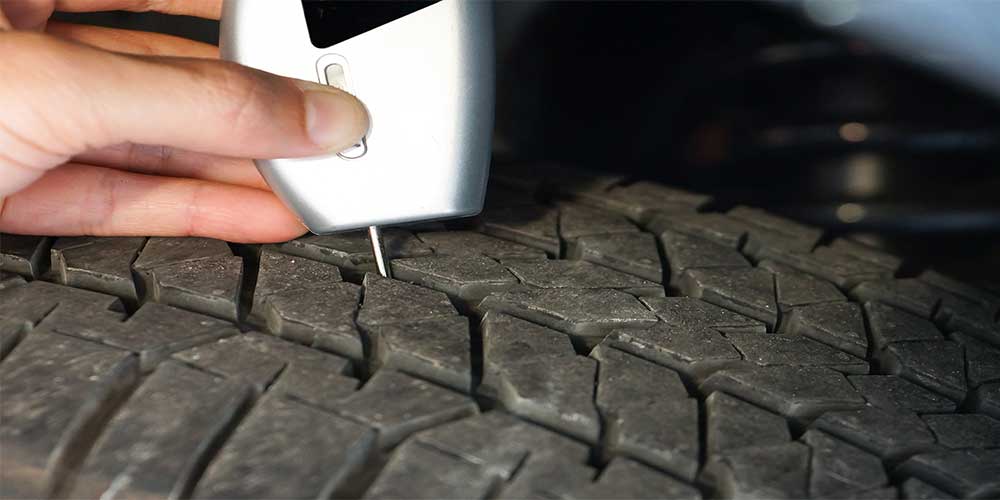
When was the last time you checked your car? Specifically, your tyres? They are the only thing between you and the road. As you are reading this, can you be certain that your tyre tread depth is legal? Or safe?

What Difference Does Your Tyre Tread Depth Really Make?

Tests carried out by Continental Tyres show that braking distances lengthen faster as your tyre’s tread depth reduces. For example, at 85 kmph on a wet road:

  • The stopping ability of a tyre whose tread depth has reduced from 8mm to 3mm is reduced by 16%
  • The stopping ability of a tyre whose tread depth has reduced from 3mm to 1.6mm is reduced by a further 40%
  • A tyre with 1.6mm tread depth will take more than twice the distance to stop as a tyre with 8mm tread depth

Want to know what this really means?

  • With a tread depth of 3mm, it will take you around 2.5 metres further to stop
  • With a tread depth of 1.6mm, it will take you around 8.8 metres further to stop

Why Is the Legal Tread Depth 1.5mm?

Like most tyre manufacturers and other tyre experts, we recommend that you replace your tyres if your tread depth reduces to 3mm. Given the effect on braking distances, it makes sense. If so many recommend changing tyres at 3mm tread depth, the question is, why is the legal minimum only 1.5mm? It doesn’t make much sense.

70 Cents Per Week – The Cost of Changing Tyres 3mm

Continental Tyres didn’t only test braking distances. They assessed the cost of changing tyres at 3mm instead of 1.6mm. They considered average mileage and that tyres should last around 55,000 to 60,000 kilometres.

Continental has calculated that it would cost the average motorist only 70 cents per week to change tyres at a tread depth of 3mm instead of 1.6mm.

70 Cents Per Week for Safer Driving

Your safety on the road doesn’t only depend on braking distance. Deeper tread depth improves your grip on the road. On wet roads, the tread helps to expel water – and that reduces the risk of aquaplaning. On all roads, the extra grip created by extra tread depth provides better handling and safer cornering.

If you ask yourself one question today – as you check your social media after breakfast – it should be this: Is my life worth 10 cents today? You’ve probably got more than that in loose change in your pocket.

Keeping your family and fleet safe on the road,

Dean Wood

1 4 5 6 7 8 28
>