Category Archives for "Tyres"

Truck Tyres

How Long Should Your Tyres Last?

How long should the tyres last?

Well, at the end of day, this is such a qualitative thing. Actually it really depends on a large degree you and your choices. 

Factors that affect Tyre lifespan: Quality and Budget

Firstly, it's a choice to buy quality.  You can buy cheap, cheap, or rather its rubber wears quite easier, obviously to buy quality and where it'll last longer.  So you've got to make that choice at the start. Obviously it depends on budget depends on what the use of the tyre is. 

Once you own the tyres, then obviously there's question of how you treat the tyres. And this is, by far the biggest component. 

If you buy really cheap tyres, then you're going to get what you buy. But if you buy quality tyres, and you look after them, and really that is the aspect that we really can control. You’re the type of tyres you buy will be largely based on your budget and decisions based on that. Okay, so that's fixed once you either, but what you can do in the meantime, is things like inflate your tyres. Well, there's other videos on this on how to make the bid last longer.

But how long would they last? How long they normally last? 

HOW LONG WILL PASSENGER TYRES LAST?

Well, okay, on a passenger tyre, you look at sort of two years, 40,000 kilometres. 

HOW LONG WILL 4WD TYRES LAST?

On average, can you get more? absolutely you can. In a full  tyre, you're probably looking at 80,000 off road type thing. 80,000. But then again, it depends what you're doing. 

If you're driving on the road a lot, and you're the big novelty tyres that make all the sound and look fantastic, then actually don't expect to get 80,000 of them. But if you're doing proper off roading on a regular basis, and you're not driving on the road that much, then actually the stress on them and the wear on them is not as much as it would be if you're driving on the road. So obviously, if you fall drive driving on the road, we can expect probably a 40,000 account. 

Any performance tyre, we mean performance size. It’s anyone's guess it depends on how much of revhead you are? Depends on the speed? If you're breaking all these sort of things. You’re looking at sort of 20,000 to 25,000? 

HOW LONG WILL PERFORMANCE TYRES LAST?

Remember, the performance rubber is there to keep you on the road? Not necessarily keep you running a tyre marathon. So it's not designed to last ages. 

If you can get a really hard compound that will last longer. It'll be a crappy ride. But the reality is, you probably won't have the traction so you might start sliding things. 

Look, most tyres these days. They're safe, they're effective. There's a lot of technology gone into tyres, and you're benefiting from that. 

THE PROBLEM WITH HUMANS & TYRE LONGEVITY

The problem we see on a regular basis is that people don't look after their tyres, they don't inflate them, or inflate them regularly enough, and rotate them, you know check them out and actually feel the tyre and see if it's flat spots to see if there's wear on one side due to being out of balance or being the wheel alignment out or the shock absorbers out any of those sort of things and that's where we can definitely help get the most out of your tyres. 

Give the team a call on 0733753366 and we’ll be happy to work at getting you the best possible value from each and every tyre. 

Keeping Your Family and Fleet Safely On The Road.

darra tyres brisbane

Darra Tyres Brisbane Youtube Channel @darratyres is back keeping it in the family

Hey guys,

Welcome to Darra Tyres Brisbane YouTube channel.

So we're gonna cover everything tyres, you know those black things or sit on the bottom or whatever vehicle you ride or we pretty much handle at all, to any question you've got for any type, any vehicle any purpose, then this is the YouTube channel for you. 

Darra Tyres Brisbane 

So basically what we're going to cover is most of the things that you don't really think about, and actually, to a large degree, you shouldn't have to think about it.

They should sit there and do their job for many 1000s and in fact, 10s of 1000s of kilometres, if you look after them, so we're going to show you how to get the most life out of your tyre whilst having the most comfortable ride, and maintaining safety. 

Of course, adhering to the law, we do live in Australia and have a little bit of that. So basically, this channel, rather than take this boring approach of you know, pump up because the 40 psi or whatever it is, we're actually going to look at the reality of the situation and give you really practical stuff that you can use on a day to day basis. That actually is going to impinge upon your life too much, but is going to save you money. Okay?

So that's what Darra Tyres Brisbane Youtube channel is all about. So make sure you click there, like and subscribe to our channel.

We'll go on this journey together and explore the wonderful world that is ties. It's a massive industry, and it's something that everybody takes for granted transportation. It's so key to life and an essential service. So let's get into it.

So who am I? Well it's Brett, Kevin's son who is running the marketing and Youtube these days. Kevin has retired from the day to day but still plays an active part on the channel and business and is my technical advisor for these videos. I grew up over the past 30 years and before that my whole life of Dad (Kevin) being around trucks, transport and everything mechanical. So whilst I am not one to pick up the tools these days, its certainly been a big part of my life since Dad's 'right-of-passage' was to get me to strip a old Holden straight-six 202 engine and put it back together. 

Keeping Your Family and Fleet Safely on the Road.

is-it-cheaper-to-buy-tyres-online

Discover the Best Tyre Places Near You – Now!

When it comes to tyres, it's important to find a reliable and trustworthy place to get them. Whether you're looking for car tyres, motorcycle tyres, or other types of tyres, you want to make sure you're getting the highest quality at the best price. But how do you know which places offer the best products and services? That's why we're here to help you discover the best tyre places near you!

Introduction

No matter what type of vehicle you have, it's important to have the right type of tyres. The right tyres can make all the difference when it comes to safety, performance, and fuel efficiency. But finding the best tyre places near you can be a challenge. With so many options available, it can be difficult to determine which one is the best.

Fortunately, we're here to help. In this blog, we'll discuss the importance of finding a reliable tyre place, what to consider when choosing a tyre place, the best tyre places near you, tips for choosing the best tyre place, the benefits of using a reliable tyre place, the best online tyre places, the advantages of online tyre places, and things to keep in mind when searching for tyre places online.

The importance of finding a reliable tyre place

Having reliable tyres is essential for the safety of you and your passengers. Tyres are the only part of your vehicle that connects you to the road, so it's important to make sure you have the right ones. If you don't, you could be putting yourself at risk for an accident.

In addition, having the right tyres can improve your vehicle's performance. The right tyres can provide better traction and handling, which can help you get better fuel economy. And if you're looking for tyres for a specific type of vehicle, such as a motorcycle, having the right tyres can make a huge difference in how it handles.

Finally, having the right tyres can help you save money in the long run. Quality tyres can last longer and can help you get the most out of your vehicle.

What to consider when choosing a tyre place

When it comes to choosing a tyre place, there are a few things to consider. First, you should check the reputation of the place. Look for customer reviews to see what people are saying about the place. You should also check to see if the place offers warranties on their tyres.

It's also important to make sure the place has the right tyres for your vehicle. Different vehicles require different types of tyres, so you want to make sure the place you're considering has the right ones for you. Finally, you should look for a place that offers competitive prices. You don't want to overpay for your tyres, so make sure you compare prices with other places.

The best tyre places near you

Now that you know what to look for, it's time to find the best tyre places near you. One of the best places to start is by asking for recommendations from friends and family. Chances are, someone you know has had a good experience with a tyre place and can give you a good recommendation.

You can also search online for reviews of local tyre places. Sites like Yelp and Google can give you an idea of what customers think of a place. You can also check out forums and social media groups to get an idea of what people are saying about local tyre places.

Finally, you can visit the place in person to get a better feel for the place. Check out the selection of tyres they have and talk to the staff to get a better idea of their customer service.

Tips for choosing the best tyre place

When it comes to choosing a tyre place, there are a few tips you should keep in mind. First, make sure the place has a good reputation. You want to make sure the place you choose is reliable and trustworthy.

Next, make sure the place has the right tyres for your vehicle. Different vehicles require different types of tyres, so you want to make sure the place you choose has the right ones for you.

Finally, make sure the place offers competitive prices. You don't want to overpay for your tyres, so make sure you compare prices with other places.

The benefits of using a reliable tyre place

Using a reliable tyre place has a lot of benefits. First, you'll be able to get the right type of tyres for your vehicle. Quality tyres can provide better traction and handling, which can help you get better fuel economy.

In addition, you'll be able to trust that the tyres you get are of the highest quality. Quality tyres can last longer, which means you won't have to keep buying new ones.

Finally, you can trust that the staff at the tyre place will be knowledgeable and helpful. They can answer any questions you have and provide advice on the best type of tyres for your vehicle.

The best online tyre places

In addition to local tyre places, there are a number of online tyre places you can check out. Online tyre places typically offer a wide selection of tyres at competitive prices. You can also read customer reviews to see what people are saying about the place.

One of the best online tyre places is Darra Typing Tyres. They offer a wide selection of tires for different types of vehicles at competitive prices. Plus, they offer a wide range of services, from wheel balancing to tyre rotation.

The advantages of online tyre places

Online tyre places offer a number of advantages. First, they typically offer a wide selection of tyres at competitive prices. You can often find better deals online than you can at local tyre places.

In addition, online tyre places often offer free shipping, so you don't have to worry about transporting the tyres to your home. Plus, you can often get the tyres installed for free if you choose to have them shipped to a local tyre place.

Finally, online tyre places often offer warranties on their tyres. This can give you peace of mind knowing that you're getting a quality product.

Things to keep in mind when searching for tyre places online

When it comes to searching for tyre places online, there are a few things to keep in mind. First, make sure the place has a good reputation. You want to make sure the place you choose is reliable and trustworthy.

Next, make sure the place offers competitive prices. You don't want to overpay for your tyres, so make sure you compare prices with other places.

Finally, make sure the place offers free shipping and installation. You don't want to have to pay extra for shipping and installation, so make sure you find a place that offers these services for free.

Conclusion

When it comes to tyres, it's important to find a reliable and trustworthy place to get them. Finding the best tyre places near you can be a challenge, but with the right tips and information, you can find the perfect place for you.

If you're looking for the best tyre places near you, call the team at Darra Tyres on 0733753366 today! They offer a wide selection of tyres at competitive prices and offer a wide range of services, from wheel balancing to tyre rotation. Plus, they offer free shipping and installation, so you can get the tyres you need without having to worry about transportation or installation.

Finding the right tyres for your vehicle is essential for the safety of you and your passengers. With the right tyres, you can get the most out of your vehicle and enjoy a safe and comfortable ride. So don't wait any longer - find the best tyre places near you today!

Self-Repairing Tyres: Will It Be The Future?

Self-Repairing Tyres: Will It Be The Future? | Isn’t it frustrating to pull off a highway just to fix a flat tyre? Thanks to a major breakthrough in science and technology, we have developed a material that makes it possible for tyres to heal and repair on their own quickly. 

This idea of creating self-healing tyre materials is not new though. Back in 2013, Spanish scientists discovered a material that gained  97% of the original tyre stability back within two hours by just letting it rest after cutting it with a sharp blade. 

But what really is it that makes self-repairing tyres the tyres of the future? Well, we have listed some reasons below for you. 

You don’t need vulcanisation for self-repairing tyres.

An important step in the process of manufacturing this tyre of the future is to make sure that it does not need vulcanisation. In 1839, Charles Goodyear added sulfur to the rubber during vulcanisation. That is when the tyre rubber became more durable and turned into the plastic to elastic state but these links can’t be restored when they break so in no way can these tyres be used for the long run. 

To avoid that, scientists have chemically modified rubber to have the same level of elasticity and durability similar to what can be accomplished by vulcanisation. Within a week, a damaged tyre that is made out of this compound can be used again. The healing period is faster when the heat is added to it as it accelerates the healing process. These self-repairing tyres are able to withstand a stress of 754 pounds per square inch. 

There are standards for self-repairing tyres.

In the past, tyre manufacturers did models of tyres that repair themselves when they’re damaged. Supposedly, these models improve road safety as a punctured tyre can lead to a blowout which decreases car handling dramatically, especially during high-speed rides. However, new discoveries have a different approach to self-repairing tyres. Manufacturers of this type of tyre now use a vicious coat under the tread so when the outer layer gets broken, the mass within it can fill in the holes completely. This may already become a permanent solution for car owners so they won’t have to change their tyres even when they are damaged.

What does the future of self-repairing tyres look like? 

Customers can get self-repairing tyres in the near future. While it’s hard to predict which method and technology can be the most reliable, these innovation secures a slot in the future. Self-repairing tyres will allow riders to drive safer and can prevent a lot of road accidents. From now, it’ll only be a matter of time until this technological advancement becomes a standard in all parts of the world. 

If you need new tyres in Brisbane, visit Darra Tyres. If you have any tyre questions, contact Darra Tyres today.

Keeping your family and fleet safe on the road,

Kevin Wood

Top 5 Tips To Keeping Your Tyres In Shape For Your Safety

All car owners should always put routine car maintenance as a priority. Even if most parts of a vehicle is important for it to fully function, one of these parts is vital in terms of safety and functionality: the tyres. Keeping your tyres in shape is critical to the handling, safety and overall quality of your driving. This is why tyres are significant investments and should not be taken for granted. 

You see, driving is one of the most dangerous things we do in our lives and we don’t even realize that. We rely on the four tyres on our vehicles to keep us travelling through our route with safety. And this is exactly why it is extremely essential to keep our tyres well-maintained. 

So how do we do that? Below are the top 5 tips for keeping your tyres in shape for your safety: 

Check Proper Air Pressure.

It is important to keep your tyres aired up to the proper pounds per square inch (PSI). Your tyres are created to work best at a specific PSI. Overinflating them can lead to premature wear and may cause a tyre blowout. Underinflation on the other hand may allow your tyres to come unseated from the wheels during manoeuvres and possibly wears out quicker giving your decreased control over your driving. It is essential for you to keep a tire gauge in your vehicle at all times to help you check the air pressure in your tyres on a regular basis and adjust the air as needed.

Rotate Your Tyres.

The world-famous tyre manufacturer says that rotating your car tyres must be done every 6,000 to 8,000 miles because each tyre wear differently. For front-wheel-drive cars, the front tyres wear twice the rate of the rear tyres. Some tyre experts say that in left-hand-drive areas, the left tyre wears faster than the right tyre so you must keep an eye on that. Having your cars rotated on a regular basis helps in achieving more uniform wear, giving you more consistent performance and a longer tyre service life.

Confirm Your Treads.

For ages now, it is known that tyres should have at least 2/32 inch of tread depth for it to function best and laws agree on this. However, there are new studies which suggest that greater tread depth is a better option for drivers.

Balance Your Tyres.

Getting your tyres balanced from time to time is also very important in maintaining your vehicle. A tyre technician will do this for you using a machine that checks the weight distribution of your ride all allows the placement of lead weights on the tyre rim to achieve a balanced dispersal. Balancing your tyres reduces vibration and gives you a better ride quality.

Align Your Tyres. 

Apart from your air pressure, tread depth and tyre balance – it is also very important to keep your tyres aligned. The front tyres require regular alignment to ensure that there is not too much difference in the way these tyres are pointing. Not having your tyres aligned will cause excessive premature wear. 

Keeping your tyres in shape for your safety is basic but vital. Engaging in a regular tyre inspection and maintenance, plus moderating how you drive can keep you safe on the road and add to the lifespan of your tyres.

If you need new tyres in Brisbane, visit Darra Tyres. If you have any tyre questions, contact Darra Tyres today.

Keeping your family and fleet safe on the road,

Kevin Wood

Buying tyres

Tyre Buying Tips

Get the Best Tyre within Your Budget

So, you need new tyres. The choice is huge and confusing. These tyre buying tips should help you choose the best tyres for your vehicle, driving style and budget.

Match Your New Tyres to Your Car

Tyre manufacturers invest big money into developing new tyres and ensuring tyres are made to keep you safe.

The car manufacturer will have tested many types of tyres on the vehicle. They will have tested for handling, braking, how fast the tyre tread wears, road noise and ride comfort. In your car owner’s manual, it is likely that you’ll find recommendations for your tyres, including size, speed rating and load rating. You should always buy the type of tyre recommended by your car’s manufacturer.

How Do You Know That You Are Buying Tyres to Match Your Car?

When buying new tyres, the markings on the tyre’s sidewall tell you all you need to know. It may look like you need an Enigma machine to decipher the confusing code, but this guide tells you all you need to know:

Vehicle – Tyres are developed for different vehicle types. This is indicated by the following letters:

  • P: passenger car and most 4WD
  • LT: light trucks
  • M: motorcycle
  • T: temporary

Tyre width – The first numbers show the tyre width in millimetres.

Profile – The second number indicates the profile (tyre width to tyre height), usually as a percentage. High-performance tyres are indicated by a low percentage.

Construction – For example, ‘R’ for radial.

Diameter – Indicating which rim size the tyre is designed for, and expressed in inches.

Load Rating – Either expressed as a weight or as an index number.

Speed Rating – The final letter in the code indicates the speed rating. This is the maximum speed the tyre can travel at for 10 minutes without risk of a tyre blowout.

What Tyre Brand Is best?

You will also find the tyre brand and model embossed on the tyre’s sidewall. Premium brand tyres are likely to be more expensive, but savvy drivers buy premium tyres in Brisbane. You find that premium brand tyres could:

  • Save on fuel
  • Give shorter braking distances
  • Offer a more comfortable driving experience
  • Last longer

Whichever brand you choose, we recommend that you fit the same brand on all your tyres, and certainly never mix brands on the same axle.

Why You Should Spend Your Whole Budget on Your New Tyres

The saying that you get what you pay for is certainly true when it comes to tyres. However, never forget the car you drive and your style of driving. Here are some general rules:

  • More affordable tyres are suited to small family cars
  • High-performance cars should be paired with high-performance tyres
  • Always consider your driving style and the surfaces on which you mostly drive
  • Mid-range tyres often provide a good compromise between handling and drive experience and cost
  • Always listen to the advice of a tyre specialist

Are Cheap Tyres Worth the Risk?

If you are tempted to save a few dollars buying cheap tyres, first you should be aware of the risks. Cheaper tyres usually provide less grip on the road. This translates into less ability to avoid a crash.

Cheaper tyres also tend to be made from less stable rubber compounds, meaning you’ll need to replace them sooner. In the long run, buying cheap tyres could be more expensive as well as being less safe.

If you need new tyres in Brisbane, visit Darra Tyres. If you have any tyre questions, contact Darra Tyres today.

Keeping your family and fleet safe on the road,

Dean Wood

Tyre Thread

Tyre Tip #1: Ignore Legal Tyre Tread Depth

Is Your Road Safety Worth 10 Cents Per Day?

For most of us, the car is part of our everyday lives. Just like our mobile phones, social media, eating, drinking and breathing. You top up and recharge your mobile. You check your social media. You make a list and shop for food and drink. And breathing? Well that’s a good habit that you do naturally.

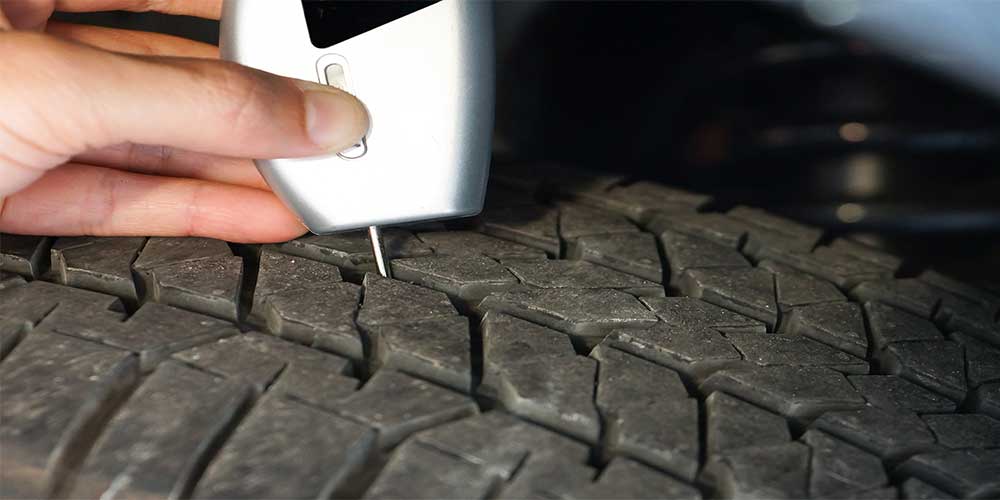
When was the last time you checked your car? Specifically, your tyres? They are the only thing between you and the road. As you are reading this, can you be certain that your tyre tread depth is legal? Or safe?

What Difference Does Your Tyre Tread Depth Really Make?

Tests carried out by Continental Tyres show that braking distances lengthen faster as your tyre’s tread depth reduces. For example, at 85 kmph on a wet road:

  • The stopping ability of a tyre whose tread depth has reduced from 8mm to 3mm is reduced by 16%
  • The stopping ability of a tyre whose tread depth has reduced from 3mm to 1.6mm is reduced by a further 40%
  • A tyre with 1.6mm tread depth will take more than twice the distance to stop as a tyre with 8mm tread depth

Want to know what this really means?

  • With a tread depth of 3mm, it will take you around 2.5 metres further to stop
  • With a tread depth of 1.6mm, it will take you around 8.8 metres further to stop

Why Is the Legal Tread Depth 1.5mm?

Like most tyre manufacturers and other tyre experts, we recommend that you replace your tyres if your tread depth reduces to 3mm. Given the effect on braking distances, it makes sense. If so many recommend changing tyres at 3mm tread depth, the question is, why is the legal minimum only 1.5mm? It doesn’t make much sense.

70 Cents Per Week – The Cost of Changing Tyres 3mm

Continental Tyres didn’t only test braking distances. They assessed the cost of changing tyres at 3mm instead of 1.6mm. They considered average mileage and that tyres should last around 55,000 to 60,000 kilometres.

Continental has calculated that it would cost the average motorist only 70 cents per week to change tyres at a tread depth of 3mm instead of 1.6mm.

70 Cents Per Week for Safer Driving

Your safety on the road doesn’t only depend on braking distance. Deeper tread depth improves your grip on the road. On wet roads, the tread helps to expel water – and that reduces the risk of aquaplaning. On all roads, the extra grip created by extra tread depth provides better handling and safer cornering.

If you ask yourself one question today – as you check your social media after breakfast – it should be this: Is my life worth 10 cents today? You’ve probably got more than that in loose change in your pocket.

Keeping your family and fleet safe on the road,

Dean Wood

Tyre Repairs

Are Tyre Repairs Safe?

Which Repair Is Best When You Have a Flat Tyre?

It is most likely that a punctured tyre must be replaced. However, it may be possible to repair the tyre. If your tyre can be repaired, there are three common types of tyre repair that might be used.

Tyre Repair #1: Plugging

A plug is the simplest of tyre repairs and the fastest. When a technician makes this type of tyre repair, they create a plug with a small piece of leather, coat it in rubber adhesive, and plug the puncture with it.

As you drive on the repaired tyre, the heat created vulcanises the rubber adhesive and it hardens to seal the puncture. It is possible to make this type of repair without removing the tyre.

There is a downside, though. The plug must fit exactly, so a strangely shaped hole will be difficult to plug. The plug may work itself loose and the repair becomes ineffective.

Tyre Repair #2: Patching

Patching is an internal repair technique.

A square of rubber is backed with rubber adhesive and glued to the puncture on the inside of the tyre. The adhesive vulcanises as the tyre heats up during driving, and this hardens the repair. Because the tyre must be removed, this repair takes longer and is more expensive than plugging. However, it is also more stable.

Tyre Repair #3: A Plug/Patch Combination

A plug/patch combination is the strongest of the three types of tyre repair. It is sometimes called a mushroom repair and seals the puncture from inside to the outside.

A ‘tail’ is added to the rubber patch and threaded through the puncture hole to act as the plug. The tyre must be removed to make the repair, and while this type of repair is the most effective it is also the most complex. It takes longer than either of the other two types of repair and is the most expensive.

How Is a Combination Plug/Patch Tyre Repair Made?

Making a combination plug/patch tyre repair is a complicated process. It’s not like making a repair on a bicycle tyre! There are many steps involved:

  1. Remove the tyre and inspect

The tyre must be inspected thoroughly to make sure that it can be repaired.

  1. Mark up the damage

The damage is located and marked, and foreign objects are removed.

  1. Drill from the inside

The puncture hole is drilled from the inside to make it uniform.

  1. Drill from the outside

The puncture is drilled from the outside until no resistance is felt.

  1. Clean the area of damage

The area of damage is thoroughly cleaned to around 1cm to 2cm larger than the size of the repair patch using pre-buff cleaners and a repair scraper.

  1. Mark and clean internally

The repair patch is held on the inside of the tyre where it will be fixed, and the tyre is marked up around the patch. The area marked is buffed to around ½cm larger than the repair patch using a domed buffing rasp. It is essential that the area is flat.

  1. All dust is removed

All dust is removed, and the repair area is cleared of wire and fluffed cords.

  1. Vulcanising accelerator is added

A vulcanising accelerator is added to the puncture channel and the buffed patch area.

  1. Plug the puncture

The patch’s tail is threaded through the puncture hole.

  1. Pull the tail through

The tail is pulled from outside the tyre so that the patch sits tight and flush internally.

  1. Flatten the patch

The patch is rolled from its centre to its edges using a corrugated tyre stitcher. This removes air bubbles and ensures complete contact with the buffed interior of the tyre.

  1. Seal internally

The repair patch and plug base are sealed with an inner liner sealant.

  1. Remount

The tyre is remounted onto the wheel and inflated to its correct pressure.

  1. Finish off

To finish the repair, the plug is cut flush with the tread of the tyre.

Should You Repair a Tyre?

As you can see, there are three ways in which a tyre might be repaired. If you have a flat tyre, you must take it to a tyre shop to be inspected. The tyre specialist will tell you whether it can be repaired after first assessing the damage to the tyre. If a repair is made, you should remember that a repaired tyre is never as strong as a new or undamaged tyre.

If you are in Brisbane and have a flat tyre or a tyre that keeps losing tyre pressure, contact Darra Tyres today. Don’t be sorry, be safe.

Keeping your family and fleet safe on the road,

Dean Wood

Checking Tyres

Is Now the Time to Check Your Tyres?

What Is at Stake if Your Tyres Remain Unchecked?

A tyre check is easy to do. It takes no more than five minutes and ensures that your tyres are running at the right tyre pressure, that your tyre tread depth is legal, and that there is no damage that could make it unsafe to drive. Yet a tyre check is the most neglected of all vehicle maintenance routines.

Neglect to Check Your Tyres and You Ignore Your Safety

New tyres have around 8mm or more of tread depth. While the legal limit is a minimum of 1.5mm tread depth, we recommend that you don’t go below 3mm.

If you let your tread depth reduce to 1.5mm, braking distance can be as much as 50% more in wet weather than it would be with a tread depth of 3mm. That could be the difference between life and death – of you, your passengers, other road users and pedestrians.

It’s not only tread depth that compromises safety on the roads when you are driving. Bulges grazes, cuts and embedded items all affect the quality of a tyre. A damaged tyre is more likely to leak air, and it is more likely to suffer a tyre blowout – at high speed, a tyre blowout could be fatal.

Do you know what condition the tyres you are driving on are in? When was the last time you checked your tyre pressure? When did you last check your tyres for bulges on the inside and outside sidewalls?

Now Is the Time to Check Your Tyres

The condition of your tyres could change after only a few miles of driving. Embedded glass could put you in danger on your next trip. Yet most drivers never check their tyres, until they feel that their ride is a little bumpier than it used to be, or that the handling is not as sharp as it once was.

By this time, it may be too late. The chances are you’ll still put off that simple, five-minute check because you have ‘more urgent things to do’.

After a while, you become used to the longer braking distances and the worsening handling round corners. Until that one time your mind is elsewhere, and you drive the car like you used to when your tyres were in good condition. Like you should always be able to.

Then you lose your grip on a bend. You drive a little too fast, and brake a little too late. The only question to answer now is, will the blood on the road be yours or someone else’s?

If there is a golden rule you should remember it is this: now is always the time to check your tyres.

Let a Professional Check Your Tyres

While a tyre check is simple, the basic five-minute check may still miss technical problems with your tyres. Internal damage or degradation, for example. That’s why you should also consider a regular tyre check made by a professional. Specialists know all the danger signs, and they will recommend action that you can take to help your tyres last longer – such as tyre rotation, for example.

What if You Need New Tyres?

If you check your tyres and find that one or more have shallow tread or damage, don’t risk your life by continuing to drive on it. Replace that damaged tyre immediately.

You might be tempted to buy part-worn tyres to save money. But part-worn tyres are a dangerous, false economy because they are:

  • Older, and may be degraded by age
  • Will have suffered wear and tear, with damage to sidewalls or internally
  • Have shallow and inconsistent tread depths, affecting grip, handling and braking distance

Premium tyres are the best option. They could save you money on fuel, benefit from shorter braking distances, offer a safer, quieter drive, and last longer.

However, not all drivers have deep enough pockets to buy premium tyres. Which is why we also stock good-quality, affordable tyres.

If you have checked your tyres and found they need replacing, do so. Don’t leave it. You are only risking the safety of everyone on the road, and everyone in your vehicle. And when you do replace your tyres, you should always invest in the best tyres in your budget.

Please check your tyres now. If you don’t, you are taking a risk with everyone’s safety when you drive. One death on the road is one death too many. If you are in any doubt about the condition of your tyres and live in Brisbane, contact Darra Tyres. We’ll discuss your needs, consider your vehicle and driving style, and make sure you invest in the best tyres in your price range.

Keeping your family and fleet safe on the road,

Dean Wood

High Performance Tyres

Should I Buy High-Performance Tyres?

Is the Expense Value for Money?

High-performance tyres are made from softer rubber compounds than other tyres. They have been designed to provide extra ride comfort and greater handling capability at higher speeds. They benefit from innovative treads that are designed to increase grip on the road and when cornering.

Are High-Performance Tyres Right for You?

When you need to change tyres, you should buy tyres that match your driving style, your vehicle, and the roads or other surfaces on which you drive. You might be tempted to opt for high-performance tyres – especially if you do a lot of highway driving at speed.

If you watch Formula 1, you will have seen how high-performance tyres give extra grip. The softer compound makes the car stick to the track. The driver gets round the track negotiating bends and corners at high speed. However, during a race lasting a couple of hours or less they may get through two or three sets of tyres.

If you buy high-performance tyres, they will last much longer than those used in Formula 1. You won’t be melting rubber at such high speeds, and the rubber compound used on commercial high-performance tyres is not nearly as soft as that used on Formula 1 tyres.

If you want better handling, more grip and improved braking power, then high-performance tyres might be right for you. Before you make this decision, though, read the rest of this article.

What Vehicle Do You Drive?

As you might expect, if you drive a high-performance car you’ll probably benefit more from high-performance tyres. However, performance tyres are becoming more popular among drivers of other car types because of the advantages they offer – manufacturers are now producing performance tyres for smaller cars.

The Disadvantages of High-Performance Tyres

Before you rush to buy high-performance tyres, it pays to be armed with all the facts. While you will benefit from the improved grip, better handling and shorter breaking distances, there are some disadvantages, too. These include:

  • Performance tyres are more expensive

Like all tyres, the bigger the tyre you need the higher the price you’ll pay. You’ll also pay a premium for how high-performance the tyre is. A small high-performance tyre might cost around $130. A high-performance tyre that you could use on a racetrack might set you back as much as $2,000.

Generally, you should expect to pay around $230 for a high-performance tyre for a 15-inch wheel.

  • You’ll use more fuel

Better handling and greater grip come at a price on top of the tyre’s cost. That price is lower fuel economy. Your vehicle must work harder to combat the traction on the road, and that means using more fuel.

  • Shorter tyre life

The softer rubber compound wears quicker, and this means your high-performance tyres won’t last as long other tyre options. You’ll be paying more for a set of new tyres sooner.

Summing Up

High-performance tyres should help you stay safer on the road. You’ll benefit from better handling and surer braking. However, your initial outlay will be greater and there is a compromise between grip and fuel consumption. You are also likely to need to change your tyres sooner.

Before making your decision, contact Darra Tyres in Brisbane. We’ll discuss your needs, consider your vehicle and driving style, and make sure you invest in the best tyres in your price range.

Keeping your family and fleet safe on the road,

Dean Wood

>